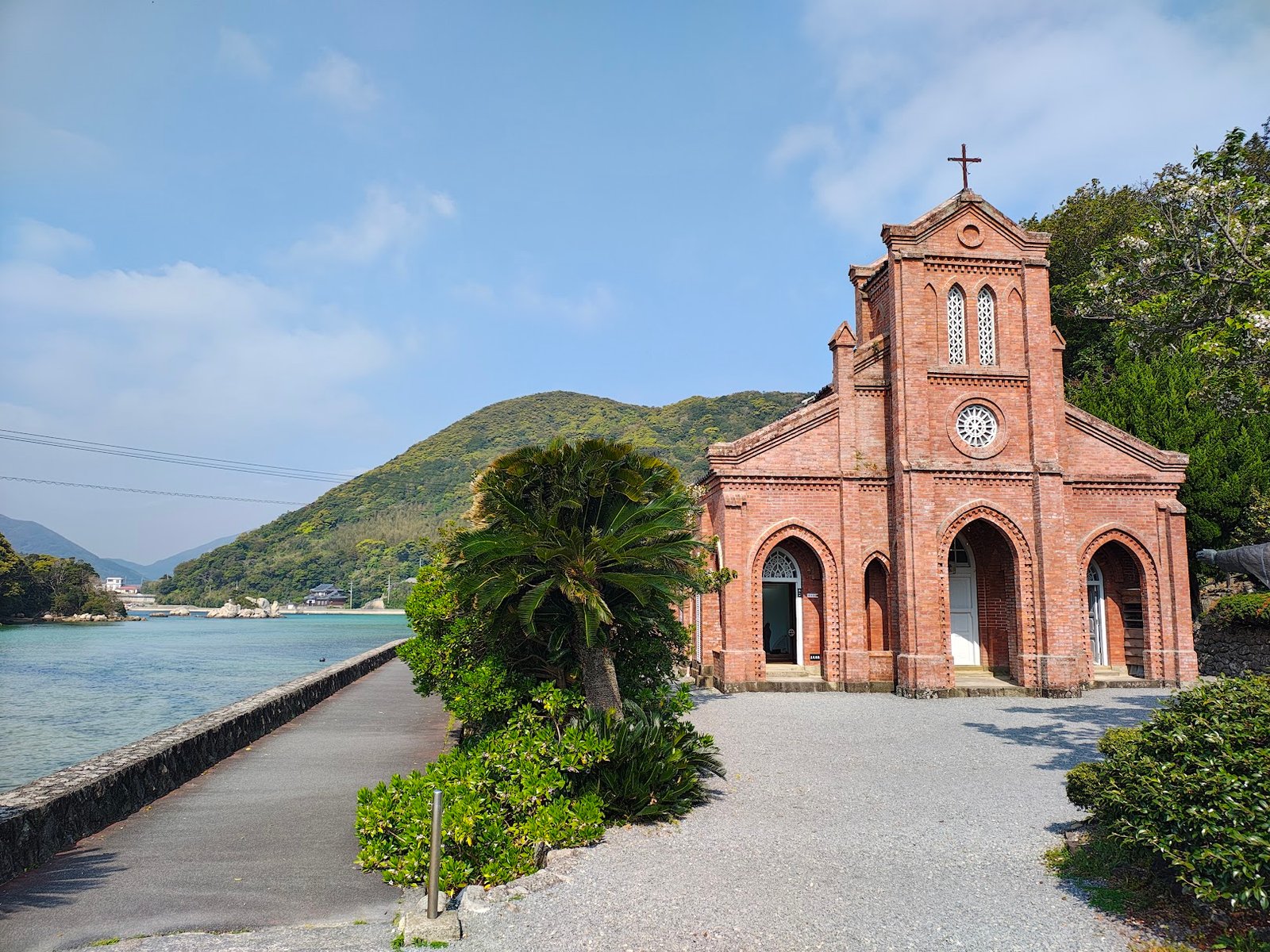
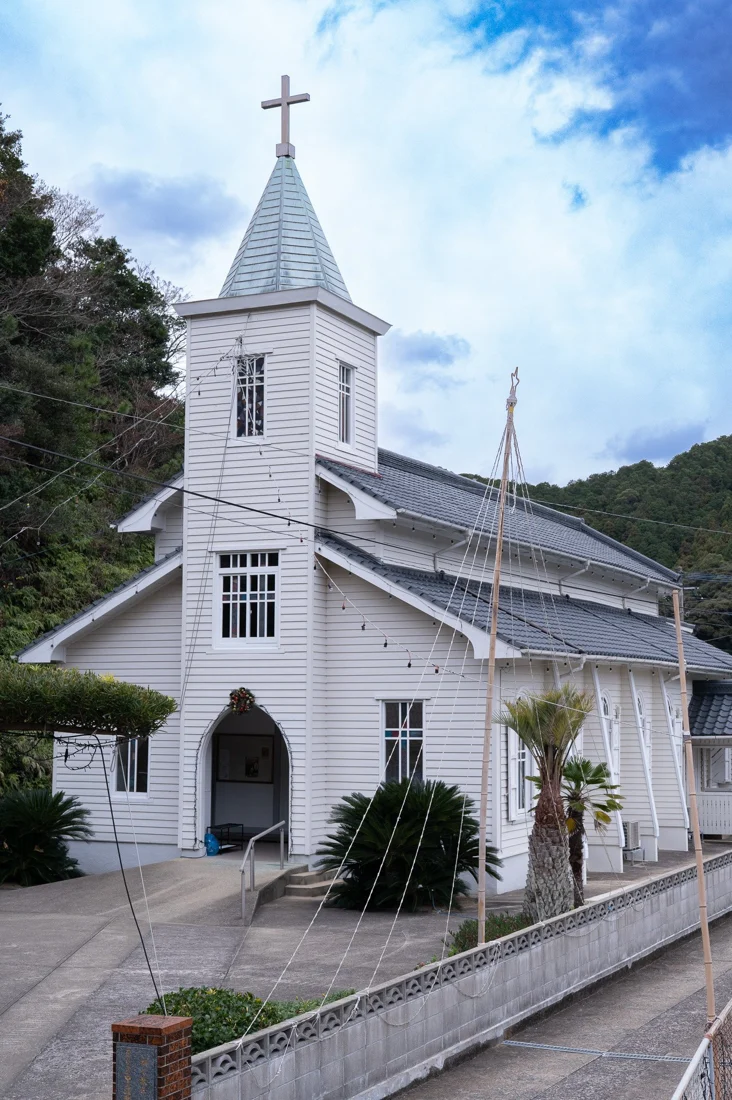
Dozaki Church beside the blue waters of Goto

Hidden faith. Martyrs. A living Church.

A story that leads
back to people.

Understand Goto through distinct chapters of mission, migration, hidden faith, persecution and renewal, rather than one unbroken story of the same community.

A white wooden church in the Goto Islands

History with care

Buildings tell a story.
Communities carry it.

Some island villages form part of the UNESCO serial property, Hidden Christian Sites in the Nagasaki Region. That designation applies to named components and boundaries, not every church in Goto.

Hidden Christians during prohibition, later Kakure Kirishitan traditions and today’s Catholic communities should be understood in their own contexts.

Read the UNESCO record ↗

Four chapters for a pilgrimage

From first contact
to living faith.

01 / FIRST CONTACT

Mission begins

Goto’s Catholic mission began on Fukue Island in 1566, when physician and Jesuit brother Luis de Almeida arrived with Japanese Jesuit brother Lorenzo Ryosai. Twenty-five people received baptism, followed by about 120 in Okuura. These first communities planted the seeds of Catholic faith in Goto.

02 / LIVING IN HIDING

Migration & endurance

From 1797 onward, migration from Sotome helped shape later island communities, including those who maintained faith during prohibition.

03 / FINAL PERSECUTION

The witness of Hisaka

The 1868 persecution included imprisonment at Roya-no-Sako. Official accounts record about 200 imprisoned and 42 deaths, including those who died shortly after release.

04 / RETURN & RELIGIOUS COMMUNITIES

Faith made visible

After the removal of anti-Christian noticeboards in 1873, open worship and church building developed. Faith also found expression in care for children and medical service.

Historical sources: Goto City mission history · Hisaka heritage record · Official heritage information center · Okuura Jikei-in. This is a concise orientation, not a complete history.

Hisaka · 1868

Roya-no-Sako.
Witness and remembrance.

During the Goto persecution of 1868, about 200 Christians were confined at Roya-no-Sako on Hisaka Island. The prison measured only twelve tatami mats, approximately twenty square metres. Over eight months of confinement, the community endured terrible suffering. Forty-two people died, including those who died shortly after release.

The memorial church stands at the persecution site. Inside, a contrasting area of carpet marks the prison’s twelve-mat footprint: a stark reminder of the people held there. Interior access must be checked before planning a visit.

Read Goto’s official memorial account ↗

The wider historical context

Persecution and the path to religious toleration

Hisaka’s tragedy belongs within the wider persecution of Christians in late Edo and early Meiji Japan. Western governments protested the treatment of Christians, including the Urakami exiles, and pressed the Iwakura Mission for religious toleration during discussions about Japan’s international relations.

In February 1873, the government ordered the removal of anti-Christian noticeboards, ending the prohibition policy. In 1889, Article 28 of the Meiji Constitution recognized religious belief subject to limits concerning peace, order and duties as subjects.

These sources establish the wider diplomatic pressure; they do not establish Hisaka as the single decisive trigger for these changes. For pilgrims, the site offers a place to remember the martyrs and reflect on faith, conscience and human dignity.

A living Church · Fukue Island

Faith put into action.

Faith passed down through persecution found new expression in care for children and the sick. Goto’s Catholic heritage continues today through communities whose prayer is joined to practical service.

THE SISTERS

A vocation of prayer and service

After the prohibition ended, Catholic women formed communities devoted to prayer, church life and care for those in need. Twenty-six communities united in 1956; the congregation received formal recognition in 1975. Known in Japanese as Otsuge no Maria, the Congregation of Mary of the Annunciation carries this tradition forward.

OKUURA JIKEI-IN

Welcoming and caring for children

In 1880, Father Marmand and local Catholic women began caring for abandoned children in a borrowed house in Odomari. Father Pélu later supported the work, using personal funds to purchase land. Today, Okuura Jikei-in is a residential children’s home for children who cannot receive appropriate care at home, guided by Catholic love and service.

More than 3,000 children have left its care over its history, according to a 2026 report. Its work continues through support for care leavers and community activities.

ST. MARY’S HOSPITAL

A calling to heal

To meet the children’s medical needs, Taka Hamasaki studied medicine and qualified as a physician in 1935. A clinic opened at Okuura Jikei-in in 1936. Its medical work later expanded to the wider island community, becoming St. Mary’s Hospital in 1955.

Today, hospital director Junko Yamanaka describes its continuing mission as responding to local needs through medical care, welfare and service rooted in Christ’s healing ministry.

FOR YOUR PILGRIMAGE

From remembrance to compassion

Alongside remembering the martyrs, make time to reflect on the Gospel lived through everyday care. These stories invite us to consider how faith can inspire service in our own communities.

Okuura Jikei-in and St. Mary’s Hospital are working care institutions. Their history can enrich your pilgrimage without a visit; institutional encounters are included only when specifically agreed with the host.
Sources for this story

The congregation’s history · Catholic Bishops’ Conference of Japan: the congregation · Okuura Jikei-in: origins and mission · Okuura Jikei-in: current operations · St. Mary’s Hospital: history · Hospital director’s message · Fukushi Shimbun, 8 April 2026: children’s home and continuing work

Your next step

Bring the story into your journey.

Explore routes that connect researched history with time for prayer and respectful reflection.

Explore sample journeys

People remembered in the landscape

Remembering Goto’s Christian witness.

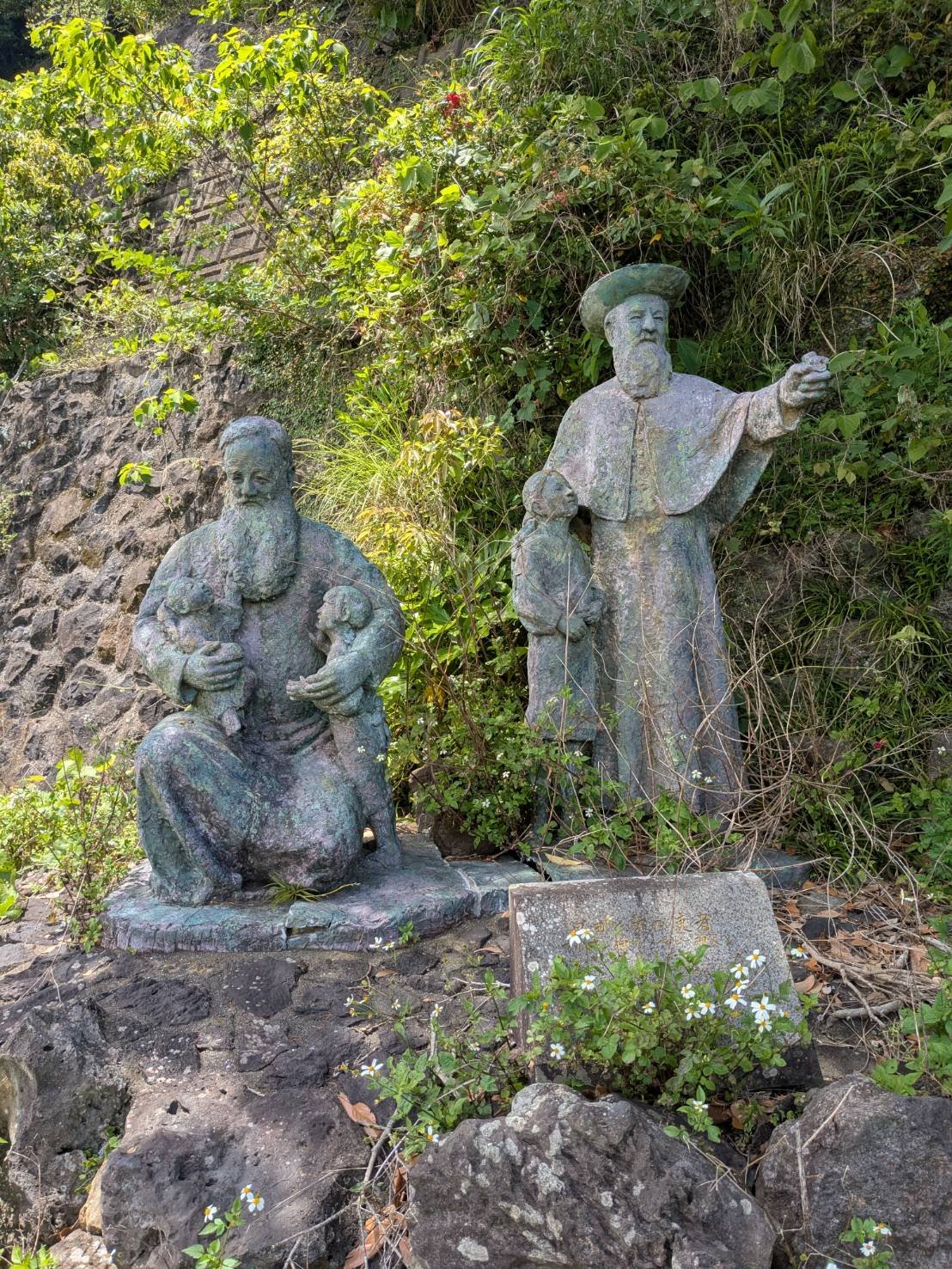
Stone memorial figures among greenery
Remembering the martyrs
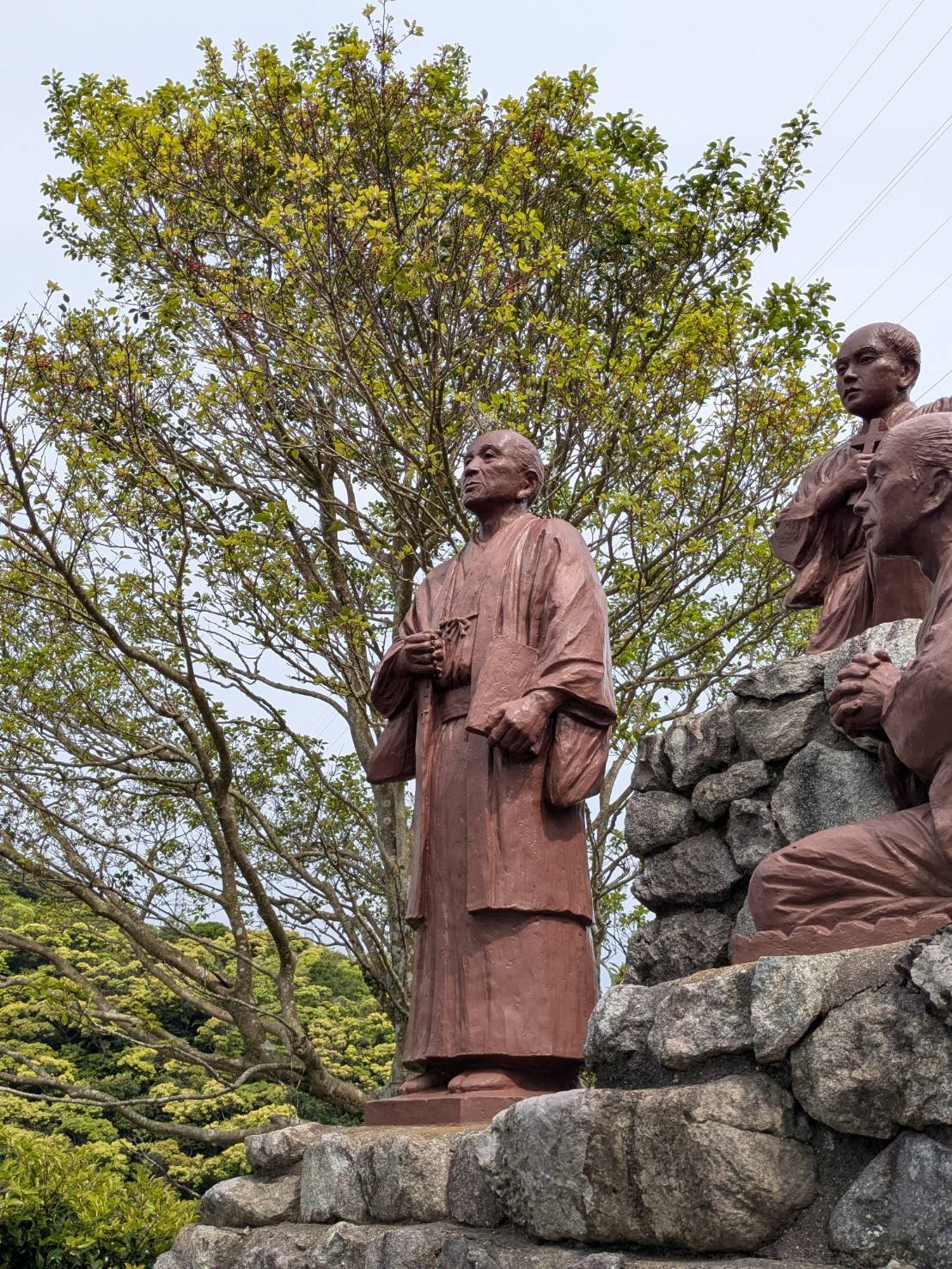
A standing statue with hands joined in prayer, surrounded by trees
A witness to Goto’s Christian heritage

Discover the people and places behind Goto’s living faith as part of your pilgrimage.

Plan your group’s pilgrimage →
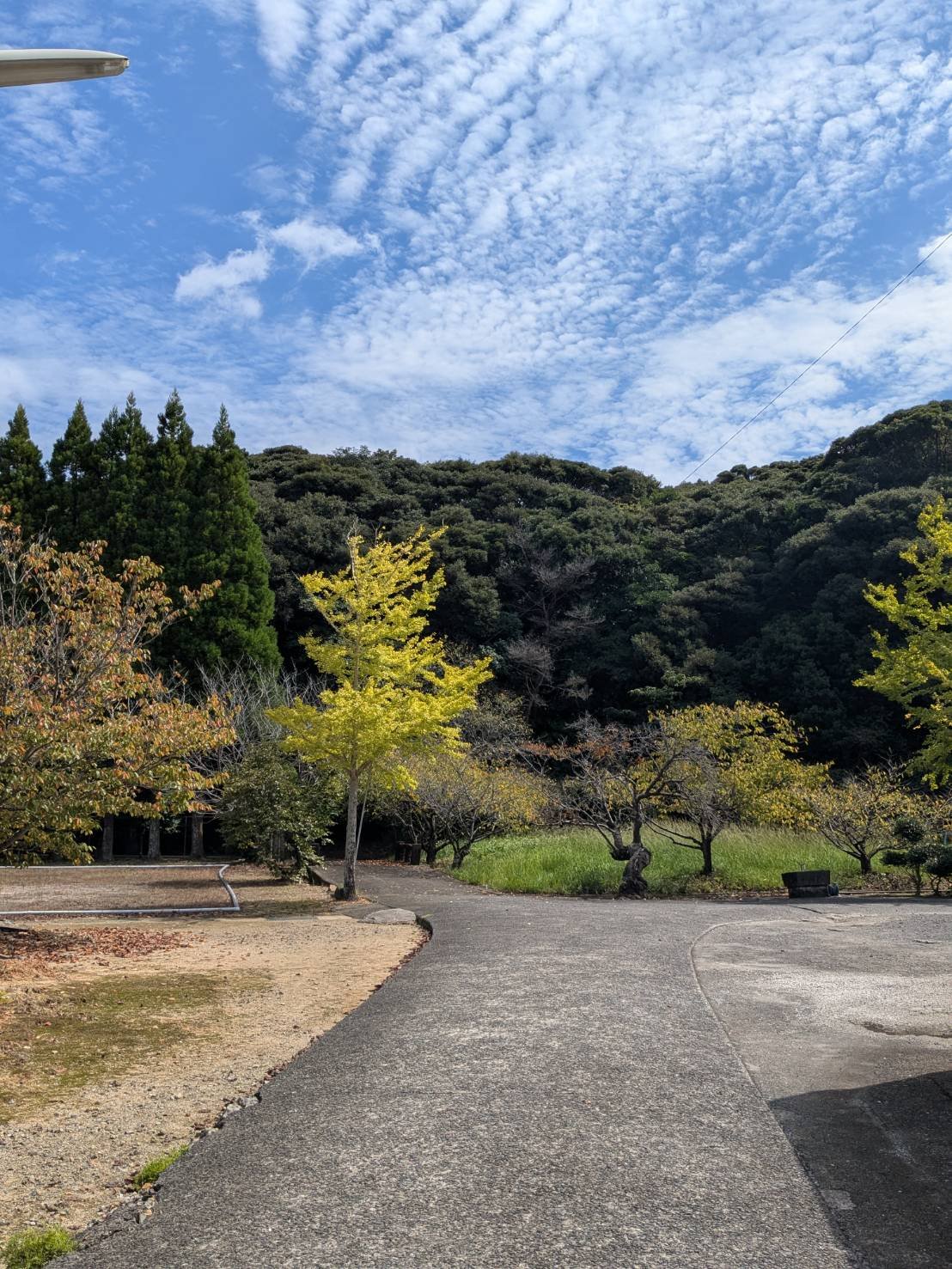
A path through the grounds of Eirinji Buddhist temple
Eirinji Buddhist temple · grounds

The wider island landscape

Discover Goto with care.

Our island journeys offer space to appreciate Goto’s landscapes and religious places with respect for the communities who care for them.

Discuss your group’s journey →
Ready to Book your Goto journey?Contact us